Tunisia
An Officer and a SpyTunisia becomes both a place of enforced distance and a working ground for the campaign against Georges Picquart. Transferred there after his investigation threatens the accepted case against Alfred Dreyfus, he is treated as a disgraced outsider by fellow officers, receives forged messages that later become material for an inquiry against him, and eventually arranges a concealed departure for Paris. The territory is not merely the backdrop to his separation from the French Army’s centre of power: it is where institutional isolation and active surveillance converge.
Posting and Isolation
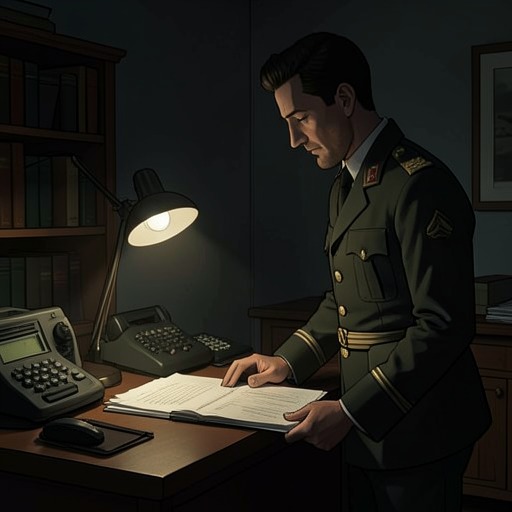
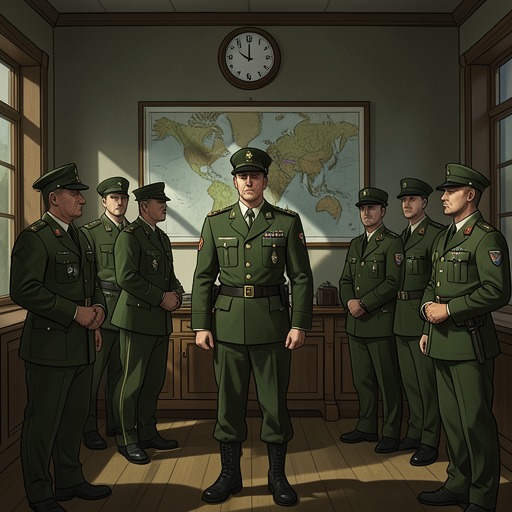
Picquart’s posting to the 4th Tunisian Rifles places him at a military club in Sousse, where his fellow officers keep their distance despite observing the deference due to his rank. He understands their reserve through the conspicuous gap between his standing and his circumstances: he is the army’s youngest colonel, yet has been transferred to what he regards as a remote and undesirable posting. The scarlet ribbon of his Legion of Honour stands out against his new regiment’s sky-blue uniform, drawing attention without dispelling the suspicion surrounding him. Tunisia thus gives physical form to his uncertain status. His rank remains visible, but the reasons for his displacement are hidden, leaving him isolated among men who assume that some disgrace must explain his presence there.
The contrast between the Sousse Military Club and its surroundings sharpens that sense of separation. Inside, its furnishings resemble those of a French garrison town, while the view beyond its walls reaches across an unpaved square and a customs shed toward the sea. Picquart follows a routine of sitting alone after lunch as other officers play cards, sleep, or read newspapers several days old. This ordinary military setting does not offer him companionship or a clear explanation of his transfer; instead, the routine repeatedly confirms his exclusion. Tunisia is presented as a posting within the army, but one that leaves Picquart cut off from the conversations and decisions that govern his case.
Leave, Leclerc, and the Hidden Departure
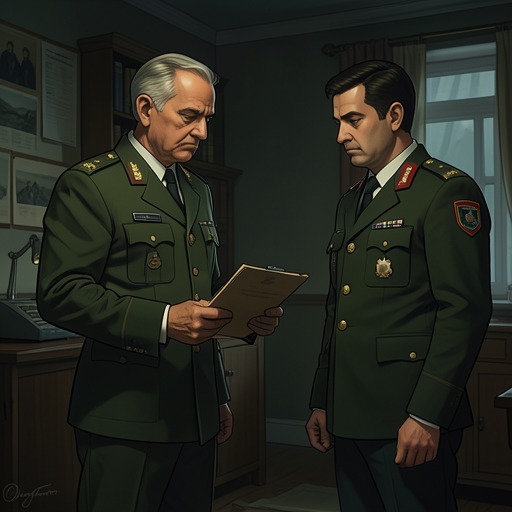
Picquart asks Jérôme Leclerc for permission to go on leave to Paris, explaining that General de Chizelle would refuse an application made through him. When Picquart says that he needs only a week, Leclerc agrees to issue official compassionate leave. He also makes clear that he will not report Picquart’s departure from Tunisia to the ministry, while refusing to promise a lie if the authorities discover it. This limited, personal assistance is the first official help Picquart has received. The permission gives him a lawful document for leaving, but the arrangement still depends on Leclerc’s willingness not to draw attention to his absence.
The journey requires additional concealment. The passenger ferry is due to leave Tunis for Marseille the next day, but the booking list is full. Picquart bribes a steamship clerk to secure a small cabin for himself and then to keep his name off the passenger manifest. He stays near the docks overnight, boards early in civilian clothes, and remains below deck rather than risk being recognized. The measures show how far a formally permitted journey has become an operation conducted under the pressure of surveillance. Once the coast has receded and he can see only the Mediterranean, he summons the steward for food and drink. The voyage also recalls Alfred Dreyfus’s account of waiting aboard a warship off Devil’s Island, linking Picquart’s temporary confinement in transit to the imprisonment that his own investigation has challenged.
Tunisia as an Operational Posting
Picquart’s isolation does not mean that he is free from official demands. A telegram from army headquarters in Tunis orders him to proceed immediately to El-Ouatia and investigate reports that hostile Bedouin cavalry are gathering near Tripoli. The instruction asks him to discuss the mission’s implications with Leclerc before departure. Its sudden arrival surprises him enough that he reads it again. In the account Picquart later gives to Émile Zola and others, he describes the General Staff’s attempt to send him on a suicide mission as part of the effort to put him out of the way. The telegram establishes the concrete assignment; the characterization of its purpose belongs to Picquart’s later presentation of the case.
Tunisia is also where Picquart receives a message claiming that Blanche de Comminges has proof that he forged the petit bleu, the telegram addressed to Charles Ferdinand Walsin Esterhazy from the German Embassy. When questioned later by General Georges de Pellieux, Picquart confirms that he received a telegram with that wording but denies that Blanche sent it. He says her name has been drawn into the affair by Armand du Paty de Clam. The message therefore turns his remote posting into part of the evidence used against him: what reaches him in Tunisia is subsequently examined in Paris as a possible indication of misconduct.
Messages, Inquiry, and Public Disclosure
The inquiry also brings Picquart’s intelligence work in Tunisia into view through documents from the investigation. A copy written out by Captain Lauth and marked secret bears a serial number added by Gribelin. Picquart identifies the underlying report as a communication from his agent, Germain Ducasse, concerning the successful closing of an operation against the German Embassy. He explains that the report’s phrase about a finished masterpiece refers to clearing the rented apartment, and that Robert Houdin was the cover name of police agent Jean-Alfred Desvernine, who had worked on the Esterhazy investigation. The explanation places Tunisia within a wider network of surveillance and covert activity, while showing how information gathered through that work can be recast as suspicious material in an inquiry directed at Picquart.
When Picquart addresses Émile Zola and others, he recounts discovering the real traitor more than twenty months earlier and says that Raoul de Boisdeffre and especially Jean-Baptiste Billot initially supported his investigation. In his account, their position changed when they understood that pursuing the evidence would require reopening the Dreyfus case. He connects his transfer to Tunisia with the later attempt to send him on a dangerous mission and with the forgeries and false testimony presented to General Georges de Pellieux’s inquiry. The place consequently marks a turn in the conflict: Picquart is removed from the centre of military decision-making, yet the evidence and messages associated with his Tunisian posting become part of the public contest over whether his investigation or the army’s accusations should be believed.
The following day, after the crowd and violence surrounding the trial, Picquart is questioned by Paul Bertulus about the forged messages he received in North Africa. Although Bertulus has been appointed by Jean-Baptiste Billot and Picquart expects little diligence from him because of his reputation and association with Hubert-Joseph Henry, Picquart finds him increasingly disturbed as the account unfolds. Tunisia’s role therefore persists after Picquart leaves: the events there must be reconstructed before a Paris magistrate, and the disputed telegrams become evidence through which the wider effort to discredit him can be examined.